The 5 Pillars of a Business Operating System


Every business runs on the same core functions. Sales drives revenue, operations keeps work moving, finance manages commercial activity, reporting supports decision-making, and automation keeps everything running efficiently.
A Business Operating System (Central Hub) brings these functions into one connected operational environment. Customer records, financial events, project updates, and reporting data become part of the same system, supporting business process integration across the organization.
The workflows may look different from one industry to another, but the underlying structure stays remarkably consistent. Most Business Operating Systems are built around five core pillars. So what do these pillars actually look like in practice? Let’s break them down.
Pillar 1: Customer and Revenue Management
Everything starts with demand. Customer and Revenue Management covers the full commercial lifecycle, from lead capture and opportunity qualification to contract management, account growth, and revenue management. It gives the business a structured way to track how revenue enters the system and where each customer relationship stands.
This pillar becomes the single source of truth for every team working with customer-facing data. Sales teams use it to manage opportunities and pipeline movement, and broader sales operations. Account managers track renewals and expansions. Customer-facing teams rely on it for contract details, communication history, and account context.
The value comes from consistency. Everyone works from the same customer record. Contract updates, deal changes, pricing approvals, and account activity stay visible across teams. Revenue stops being something tracked in spreadsheets and becomes part of the system itself.
Pillar 2: Operations and Service Delivery
This is where revenue turns into work. Operations and Service Delivery manages execution as part of the company’s broader operations management system. It handles everything required to deliver what the business sold, including planning, scheduling, coordination, task tracking, and completion status.
For construction businesses, this often includes project execution, field coordination, subcontractor management, and milestone tracking. For manufacturers, operations cover production scheduling, inventory availability, procurement dependencies, and quality control. For service businesses, operations may revolve around scheduling, ticket management, resource allocation, or case delivery.
This pillar carries the operational heartbeat of the business. Every task, milestone, approval, delay, and completion event creates useful operational data. Teams know what is scheduled, what is blocked, what is moving, and what needs attention. That visibility supports stronger operational management and makes planning significantly easier.
Pillar 3: Finance and Commercial Management
Every operational event eventually becomes a financial event. Finance and Commercial Management governs the commercial rules that determine how revenue is billed, recognized, collected, approved, and reported. Invoices, payment schedules, contract terms, purchase approvals, commissions, reimbursements, and compliance controls all live inside this pillar.
Its role goes beyond billing. This is the layer that protects margins, enforces approval logic, and gives leadership visibility into cash flow and financial performance. Pricing exceptions get reviewed. Payment milestones stay tied to contractual terms. Financial controls become part of daily operations instead of an afterthought.
Finance works best when it has access to live operational data inside a broader business process management system. Billing becomes faster, forecasting becomes more accurate, and financial reporting reflects what is actually happening across the business.
Pillar 4: Reporting, Operational Visibility, and Decision-Making
Reporting and operational visibility bring data from every pillar into a shared decision making framework. Sales performance, project health, revenue, margins, team capacity, and delivery status all become accessible in one environment.
This changes how decisions happen. Leaders no longer wait for weekly reports to understand what is happening. With better operational reporting, they can monitor business performance in real time, identify bottlenecks early, and act before small issues grow into expensive problems.
Patterns become easier to spot: a slowdown in delivery capacity, rising operational costs, a service line with shrinking margins, and a sales team closing deals faster than execution capacity allows. Good reporting turns raw data into operational awareness and stronger business visibility. That awareness improves planning, prioritization, and strategic decision-making across the company.
Pillar 5: Workflow Automation and AI
This pillar keeps the entire system moving. Workflow Automation and AI orchestrates how information flows between teams, processes, and business functions, enabling workflow orchestration across the organization.
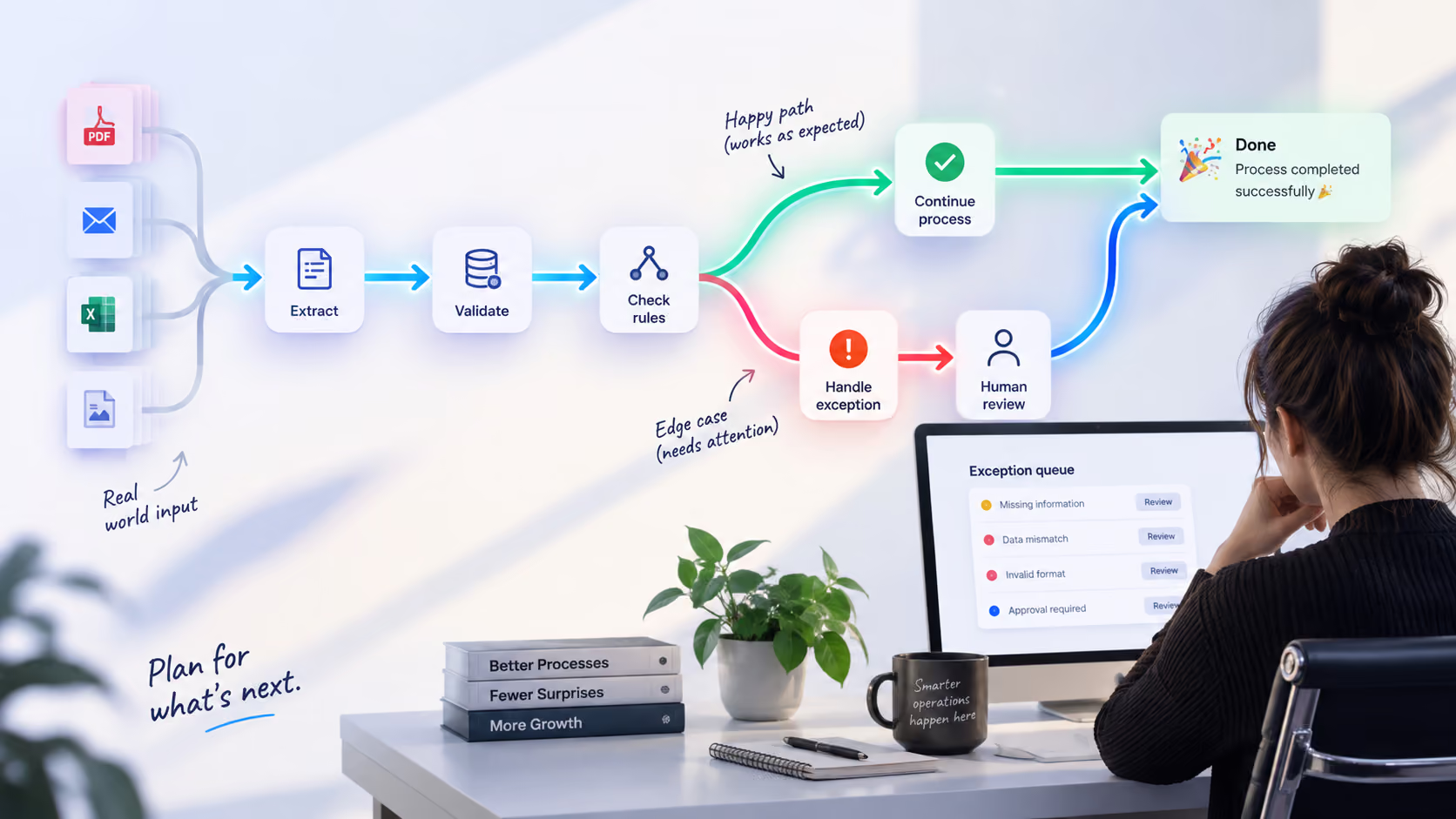
Routine transitions happen automatically as work progresses through the system, supporting large-scale business process automation. A signed contract can create a project record, completed milestones can trigger invoicing, payment confirmations can update revenue reporting, and approval requests can be routed to the right stakeholders without manual follow-up.
AI expands this layer by adding intelligence to workflows. It can convert documents into structured records, prioritize exceptions, detect capacity issues earlier, and improve forecasting by learning from operational patterns. As a result, workflows become faster, more adaptive, and more responsive to changing business conditions.
How the Pillars Connect Inside a Central Hub
A Central Hub delivers the most value when all five pillars work as part of the same continuous system, supported by strong business systems integration. A lead enters through Customer and Revenue Management and moves through the sales pipeline until it becomes a signed deal. From there, Operations takes over, managing delivery, milestones, and operational execution. As work progresses, Finance handles billing triggers, approvals, and payments, while Reporting continuously captures live data from every stage. Workflow Automation and AI supports these handoffs, keeping processes moving smoothly and reducing manual coordination.
This flow creates a connected operating environment where each business function informs the next. Sales activity shapes operational demand, operational progress drives financial events, and financial outcomes feed reporting that supports planning, staffing, and decision-making across the business.
Business Systems Integration Across Different Industries
The five-pillar structure applies across industries because every business depends on the same operational foundations and benefits from effective business systems integration.
Construction
- Customer and Revenue Management: lead intake, opportunity tracking, call center workflows
- Operations and Service Delivery: project execution, subcontractor coordination, field reporting
- Finance and Commercial Management: milestone billing, change orders, payment approvals
- Reporting and Decision-Making: project health, resource utilization, forecasting
- Workflow Automation and AI: schedule alerts, contract generation, audit logging
Manufacturing
- Customer and Revenue Management: order intake, account management, recurring orders
- Operations and Service Delivery: production scheduling, inventory management, quality control
- Finance and Commercial Management: supplier payments, shipment billing, margin tracking
- Reporting and Decision-Making: throughput, fulfillment, capacity planning
- Workflow Automation and AI: inventory forecasting, document parsing, reorder triggers
Service Businesses
- Customer and Revenue Management: onboarding, renewals, account management
- Operations and Service Delivery: scheduling, case management, service delivery
- Finance and Commercial Management: recurring billing, payroll, commission processing
- Reporting and Decision-Making: utilization, service quality, client health metrics
- Workflow Automation and AI: approval routing, onboarding automation, intelligent scheduling
The workflows may change, but the architecture stays familiar. That shared structure is what makes a Business Operating System scalable. A Central Hub gives businesses a way to manage growth without losing operational clarity, coordination, or control.
Growth gets harder when core business functions evolve separately. A well-designed business operating system keeps those functions connected through stronger business process integration, giving teams shared visibility, stronger coordination, and faster execution at scale. If you're evaluating how your current systems support growth, Atomic Actions can help you design and implement a Central Hub built around the operational realities of your business.
.avif)

.avif)