One System for Sales, Work Orders, Scheduling, and Maintenance
Summary
X-Cel Technologies is a precision CNC manufacturing company serving automotive, aerospace, and industrial manufacturing customers. The business specializes in tight-tolerance, high-volume production, prototyping, custom fixturing, inspection, and deburring, where consistency and operational accuracy matter at every step.
As the operation scaled, the team needed a more structured way to manage quotes, purchase orders, work orders, scheduling, shipping, maintenance, and documentation.
We designed Central Hub as a shared operating system that gives the company real-time visibility into production flow while keeping each department in a focused, role-based interface.
About
The main issue was not a lack of activity. It was fragmentation. Quotes, production work, scheduling details, documents, and day-to-day updates were spread across Excel files, documents, messages, and separate workflows, which made it hard to understand the true status of the shop at any given moment.
- Work orders, quotes, and purchase orders needed to be tracked together, not as separate lists.
- Employee and machine scheduling had to reflect real production constraints instead of a generic task calendar.
- Key operational details were getting lost across spreadsheets, documents, and chat threads.
- Leadership needed a live view of bottlenecks, workload, and throughput across departments.
- Documents had to be organized and permissioned so the right people could find the right file without extra coordination.
Why Implementation Was Complex
Central Hub was not a simple dashboard build. We had to model how a precision manufacturing business actually runs, then translate that logic into an interface that operators, managers, and administrators could all use without slowing down daily work.
- The same operational object could be discussed as a quote, work order, or job depending on the team.
- Scheduling depended on machine availability, employee capacity, start and end dates, and priority levels.
- Information had to be consolidated without breaking the existing way the team worked day to day.
- The document module had to stay simple for operators while still supporting structure, foldering, and access control.
- The whole system had to feel lightweight enough for the floor, but strong enough for management reporting.
Solution we built
We built a Central Hub that brings the company’s most important manufacturing workflows into one connected system. The result is a cleaner handoff between sales, production, shipping, and support functions, with fewer disconnected updates and less manual coordination.
Main dashboard
Shows active work orders, quotes, purchase orders, and production status at a glance.
Workload dashboards
Visualize employee and machine workload across time so capacity planning is easier.
Scheduling panel
Lets the team assign work orders by status, dates, machine, employee, and priority.
Manufacturing module
Keeps parts and work orders in one production flow, including statuses, priorities, quantities, due dates, operators, and machine assignment.
Shipping and suppliers
Connects outbound shipments and vendor relationships to the broader operation.
Tools & maintenance
Tracks tools, machines, and maintenance requests with start/end dates, request type, and status so maintenance work is visible and schedulable.
Documentation
Centralizes files, categories, visibility, and current document access for the team.
Representative Process Views
These interface views show how Central Hub looks in daily use, but they are only a slice of the larger operating system. Each screen is one step inside a connected manufacturing workflow that spans planning, scheduling, production control, and document access.
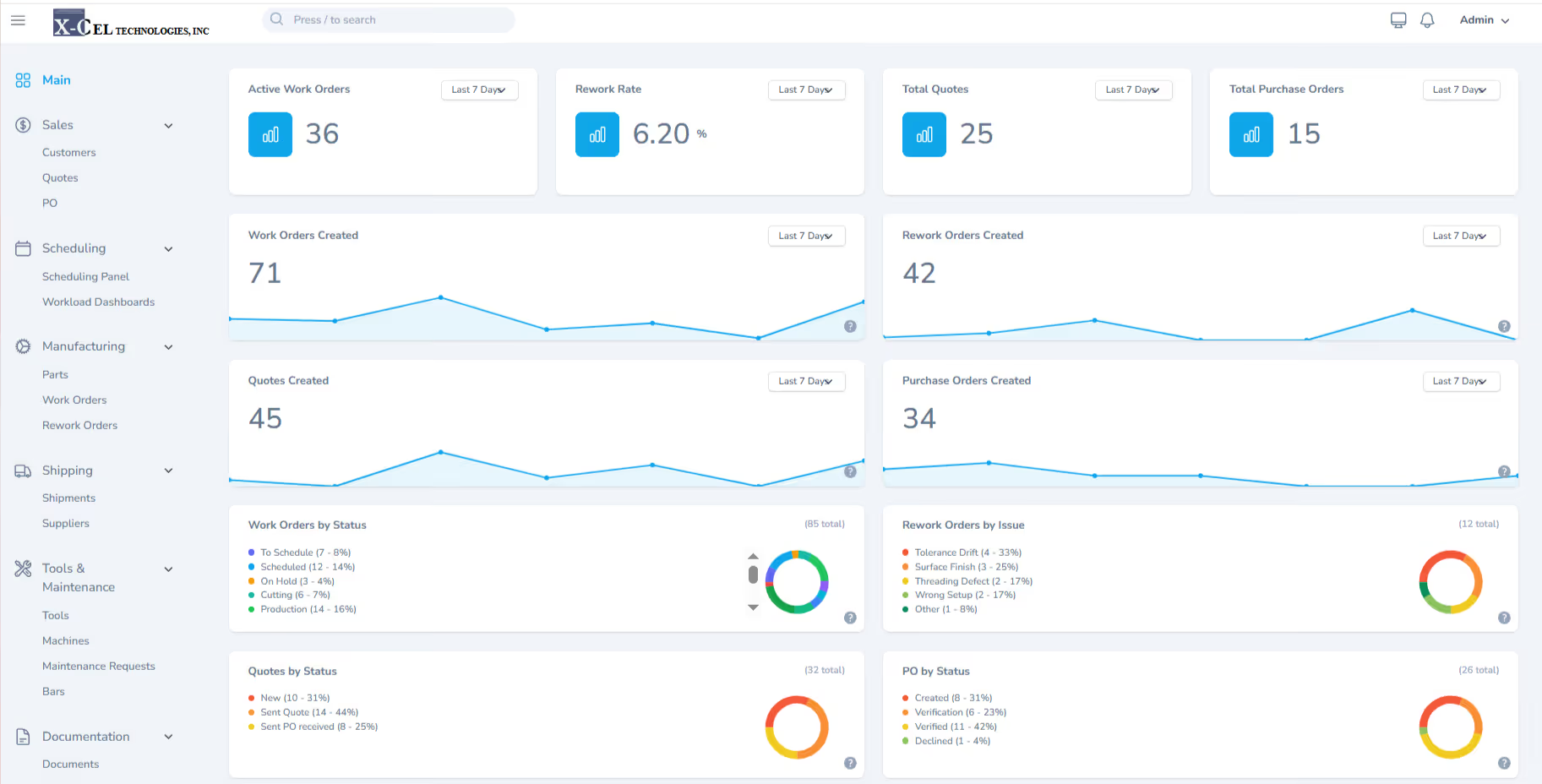
A high-level operations overview that sits at the center of the full manufacturing workflow.
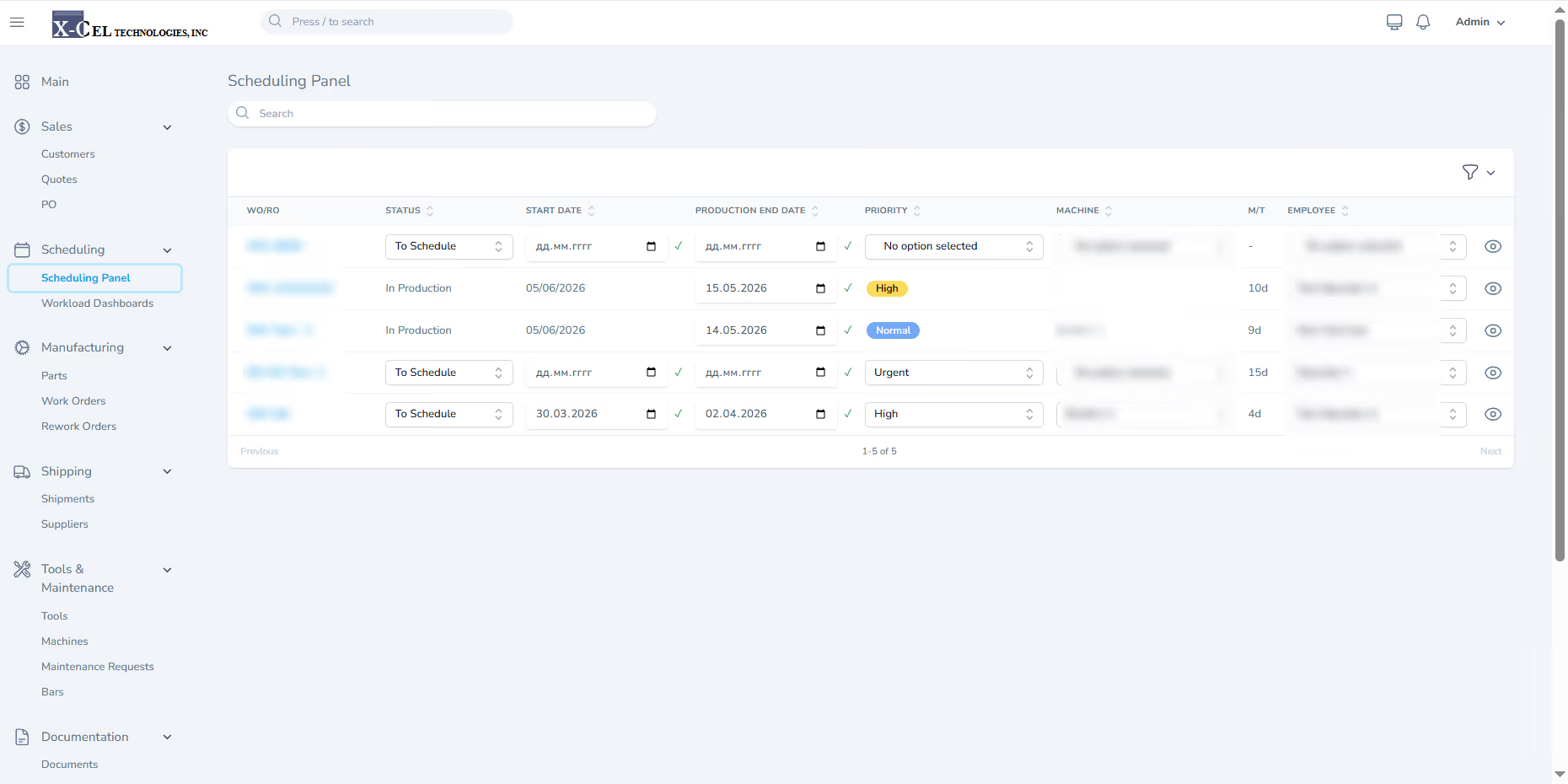
A structured interface for assigning work by date, priority, machine, and employee.
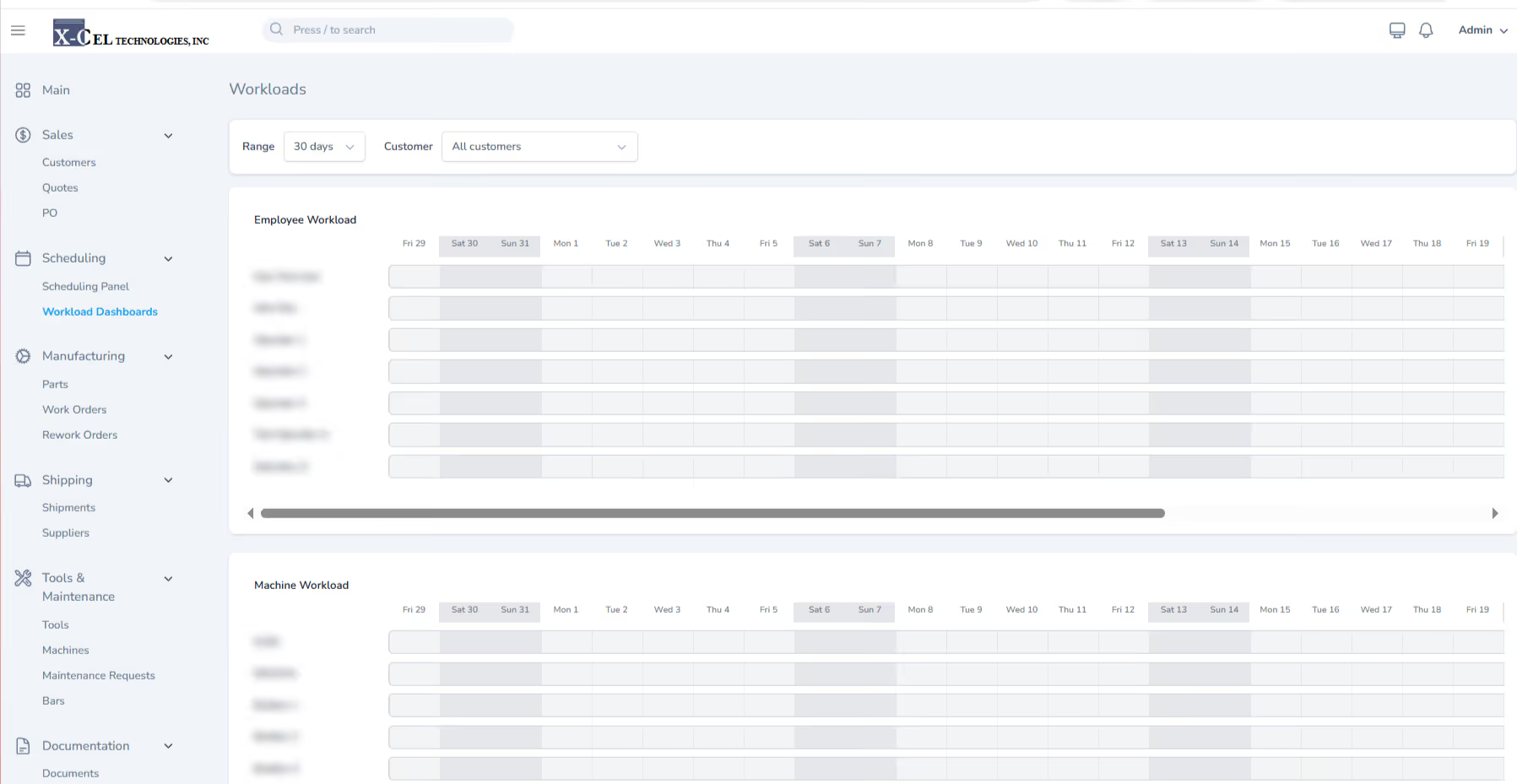
A higher-level planning view inside the system.
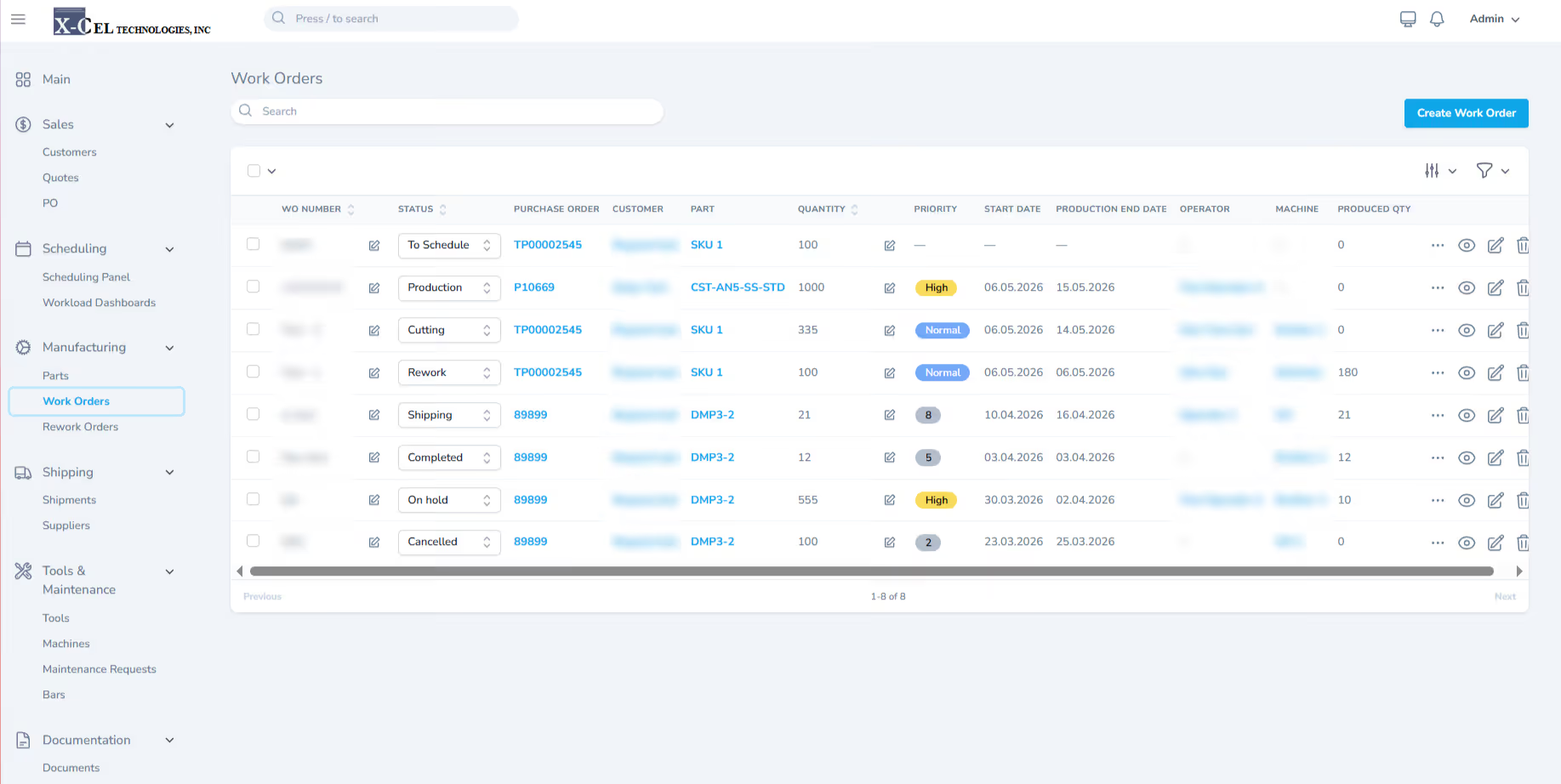
A production execution view where teams track WO status, quantity, dates, operator ownership, and machine assignment in one table.

A maintenance control view where teams manage request lifecycle, machine context, planned vs urgent type, and completion dates.

A centralized document view that keeps files, categories, visibility, and access in one place.


Results
The result was a more connected manufacturing operation with better visibility, planning, and production control across departments.
Impact Highlights
- +18% on-time order completion, helping the team deliver more jobs on schedule.
- -31% scheduling response time, reducing delays when priorities or production requirements changed.
- +24% planning-to-execution alignment, resulting in fewer gaps between scheduling decisions and shop-floor execution.
- 100% centralized visibility across work orders, maintenance requests, and documentation.
Operational improvements
- Centralized visibility across quotes, purchase orders, work orders, shipping, maintenance, and documentation.
- A manufacturing-specific operating model that reflects how the business actually runs.
- Faster coordination between departments because everyone works from the same source of truth.
- Clearer production control through status tracking, workload views, and shared operational context.
- A system that supports scale without forcing the team into generic software logic.
For X-Cel Technologies, the biggest shift was not automation alone. The platform created a unified operational layer connecting customer demand, production capacity, and execution, making the business easier to manage, easier to scale, and easier to understand in real time.
Client’s testimonial
Related case studies



.avif)