Restaurant Operations Platform for Inventory, Staff Training & Multi-Location Management

Summary
A Central Hub built to connect inventory visibility, employee onboarding, online orders, inspections, and operational reporting into one coordinated system. It was shaped through an agentic, AI-first development process with no-code prototyping, which made it possible to move from concept to delivery in months rather than the years a traditional custom build would usually require.
About
Bona Fide Juicery is a US-based healthy food company operating five to six cafes and restaurants focused on smoothies, juices, and fresh food. As the business scaled across multiple locations, the team needed a more structured operating layer to manage daily reporting, staffing, orders, and management control.
Central Hub was implemented to connect these operational processes in one system. Instead of treating inventory, onboarding, inspections, and online orders as isolated admin tasks, the platform links them through automation, dashboards, and recurring management workflows.
Growing Fast Meant Growing Pains
The challenge was not just process volume. It was fragmentation across locations, teams, and tools. Critical operational data moved through forms, spreadsheets, emails, and manual follow-up, which made visibility inconsistent and slowed down response times.
- Inventory and waste reports had to be collected and reviewed across every active location.
- Managers needed clearer visibility into trainee progress, staffing readiness, and role completion.
- Online order notifications had to reach store teams quickly without adding extra manual work.
- Monthly inspections were important for consistency, but score tracking and comparison needed structure.
- Leadership reporting depended too much on manual coordination across multiple systems.
Why Implementation Was Complex
Central Hub for BFJ was not a simple front-end CRM build. The real complexity was operational architecture. The system had to support multiple locations, different reporting cycles, training logic, e-commerce signals, and management audits while keeping the workflows standardized enough to be actionable.
- HR, operations, e-commerce, and inspection logic had to work together even though each process had different triggers and owners.
- A large share of the system runs in the background through Make.com rather than one fully visible interface.
- Only part of the operating logic appears in the Lovable dashboards, while critical automations run invisibly through forms, email, Slack, and connected tools.
- This made implementation as much about building a reliable operational backbone as about creating dashboards.
Solution we built
We built a Central Hub that combines visible dashboards with background automation to manage BFJ's core operating workflows. The result is a structured system for inventory visibility, employee progression, online order handling, inspection scoring, and recurring reporting across all locations.
Inventory & Waste Management
Collects ingredient availability and waste reports from each location, consolidates the data, and highlights recurring out-of-stock and expired inventory issues.
HR & Employee Training Tracking
Stores employee and trainee records, generates role-based onboarding checklists, and updates status from trainee to regular employee when training is completed.
Automated Reminder System
Sends recurring HR reminders and weekly management reports covering birthdays, anniversaries, and trainee feedback milestones.
E-commerce & Slack Integration
Routes online pickup orders into dedicated Slack channels so location teams receive immediate operational notifications.
Monthly Management Inspections
Supports location audits, cleanliness checks, stock verification, and scoring workflows tied to management oversight.
Operational Reporting
Summarizes inventory issues, staffing signals, and recurring operational patterns so leadership can review the business without chasing updates manually.
Representative Process Views
These interface views show selected parts of Central Hub, but they represent only a portion of the broader system. Many of the most important workflows are triggered and executed in the background through automations and integrations.
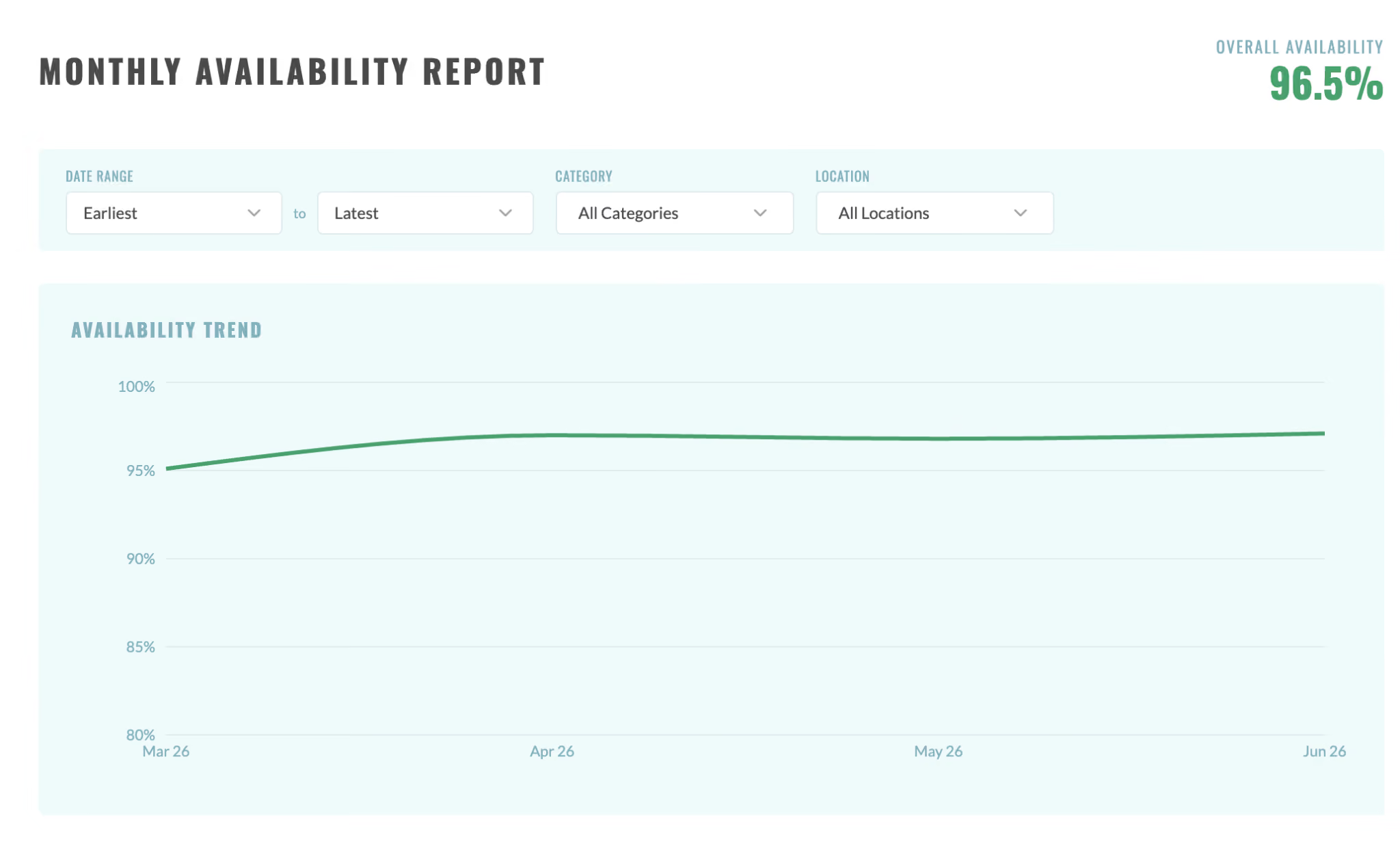
This view highlights the availability reporting dashboard, where managers can filter by date range, category, and location to monitor stock readiness trends and spot recurring shortages before they affect store operations.
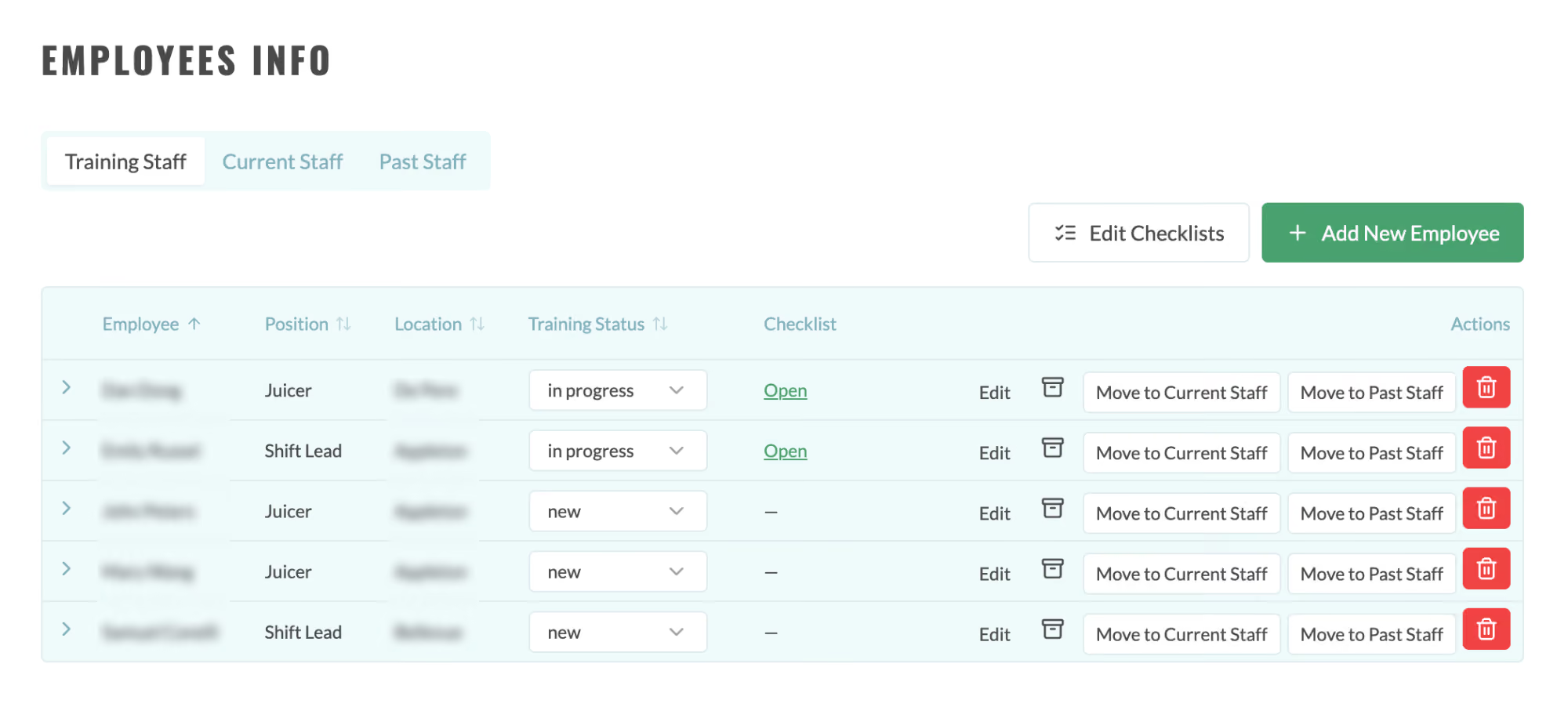
This employee management screen gives managers a live view of training status, checklist progress, role assignment, and location placement, making it easier to move team members from trainee to active staff with clear accountability.
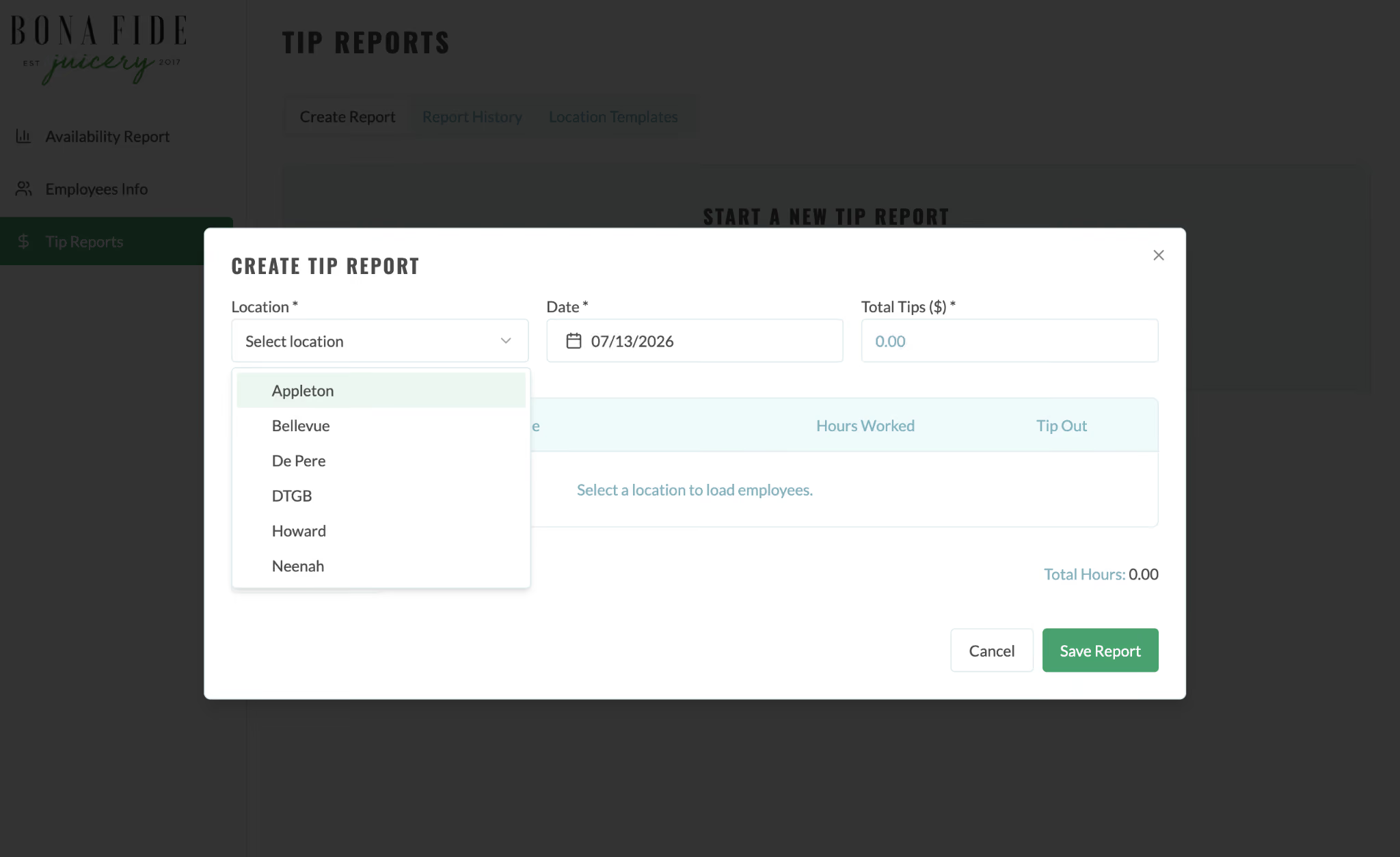
One Central Hub gives managers visibility across all six BFJ locations from a single interface. Every restaurant follows the same operational workflows, making reporting, staffing, and daily management consistent while keeping location-specific data organized in one connected system.
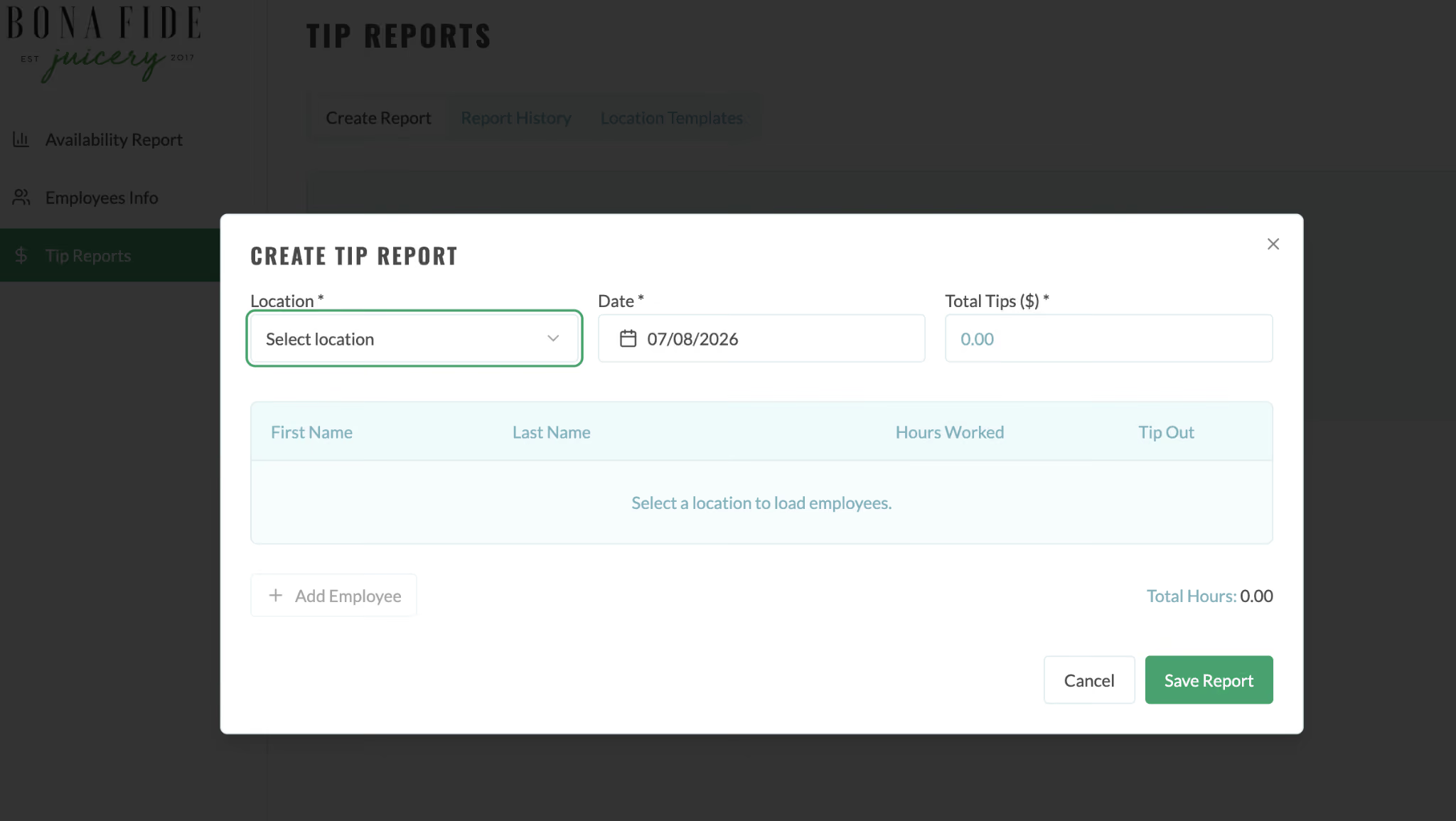
This workflow captures daily tip totals by location, distributes payouts based on hours worked, and gives managers a simple control point to validate shift compensation inputs before saving the report.


Results
Operational snapshot from the current BFJ platform and the automation scope delivered through Central Hub.
- 70% less manual admin work
- 60% faster operational response
- 100% centralized training visibility
- 50%+ improvement in follow-up consistency
- 80% better multi-location visibility
- 75% more standardized inspection workflows
Results
- One Central Hub now connects inventory, employee tracking, inspections, and operational reporting.
- Managers spend less time chasing information and more time acting on structured operational inputs.
- Training progress is easier to monitor because onboarding status is tied to checklist completion.
- Location issues can be surfaced earlier through recurring reports and standardized visibility.
- Online orders are integrated more tightly into day-to-day operations through Slack-based notifications.
Final Impact
Central Hub gave BFJ a practical operating system for running a multi-location food business with more consistency and less manual coordination. Rather than relying on disconnected tools for reporting, onboarding, orders, and inspections, the company now operates through one structured ecosystem that combines visible dashboards with a strong automation layer behind the scenes.
Client’s testimonial
Related case studies