Business Management System for Client Operations, Finance & Compliance

Summary
A full custom Central Hub built for a Polish business incubator that helps international founders and freelancers legally operate in Poland. The platform combines client and employee data, invoicing, salary requests, contracts, legalisation, and financial administration in one connected system — with an AI-powered support layer on top that scales client support without scaling the manager team.
About
FBA is a Polish business incubator that provides the legal, financial, and administrative infrastructure international clients need to operate a business in Poland. Its clients are founders, freelancers, and small teams from across Europe and beyond — each with their own customers, invoices, employees, and legalisation documents to manage.
As FBA scaled, spreadsheets and disconnected documents stopped fitting the operation. Client data, invoices, salary requests, and legalisation records needed to live in one system with clear ownership, strict access rules, and financial-grade reliability. We built the FBA Central Hub as that system — and, more recently, added an AI support layer on top so client support could scale together with the client base.
The Challenge
FBA sits at the intersection of legal, financial, and operational complexity. A single client can have their own personal data, multiple business accounts in different currencies, employees with their own legalisation documents, customers of their own, invoices, corrections, salary requests, bills, and contracts — all governed by Polish regulatory rules and internal FBA policies. Before the Central Hub, that complexity lived across Excel sheets, documents, and manager memory.
- Client data, employees, invoices, and legal documents were fragmented and hard to keep consistent.
- Legalisation expirations were tracked manually — and missing them meant contracts and bills could be created illegally.
- Invoice numbering, exchange rates, and PDF delivery were manual, slow, and error-prone.
- Access control had to reflect the real organisation: admin, controlling, manager (department-scoped), and client (self-scoped).
- Onboarding every new client required hands-on manager time, which didn't scale with growth.
- Recurring 'how do I create an invoice / salary bill' questions consumed manager capacity that should have gone to complex cases.
Why Implementation Was Complex
This wasn't a generic Central Hub. FBA's operational logic — invoice numbering formulas, legalisation-driven blocking rules, Paid-status locks, department-scoped visibility, multi-currency accounts — had to be encoded exactly. And it had to run reliably, because the outputs are legal financial documents.
- Four distinct roles — Admin, Controlling, Manager, Client — each with fine-grained per-entity permissions that had to be enforced at every layer.
- Paid-status locks: once a Salary Request or Invoice is marked Paid, most fields lock, and only Admins can override — protecting financial integrity.
- Legalisation rules had to cascade across the platform: expired passports or residence permits automatically block contract and bill creation for both clients and their employees.
- Invoice numbers follow a strict FBA formula combining serial number, month, year, client identification, initials, and department — generated automatically and non-editable.
- Exchange rates for non-PLN accounts are auto-pulled from the previous business day and applied to invoices without manual entry.
- The AI support layer had to be accurate on FBA-specific workflows, respect role-based access, handle four languages including synonyms and typos, and know exactly when to hand off to a human — while following the Central Hub's existing manager routing and Vacation Pair fallback.
Solution we built
We built the FBA Central Hub as one connected platform that covers the full lifecycle of a client in the incubator — from onboarding, through daily financial operations, to legal compliance and support. Every module shares the same data model, the same permission system, and the same audit trail, so nothing lives in a separate spreadsheet anymore.
Personal Data & Employees
Central client and employee cards with role-based access, archive, and restore. Supports both individual clients and their employees under one legal umbrella.
Legalisation
Full lifecycle for work permits, residence permits, and passports — with automatic 6-month expiration reminders and blocking rules that prevent creation of contracts and bills when documents expire.
Business Accounts
Multi-currency bank account management with IBAN validation, SWIFT auto-fill, and replication for fast setup of similar accounts.
Customers
Client's own customer base — both individuals and legal entities — with type switching that preserves address data and full CRUD.
Sales Invoices
End-to-end invoicing: auto-generated invoice numbers by FBA formula, exchange-rate auto-fill for non-PLN accounts, PDF generation and email delivery, status flow (For review → Approved), and one-click 'Mark as paid'.
Corrections & Expense Invoices
Full correction workflow tied to source invoices, plus expense invoice tracking for accurate financial reporting.
Contracts & Bills
Contract management with legalisation-aware blocking rules, and salary bills tied to client and employee records.
Salary Requests
Client-initiated salary request flow with strict status logic — once Paid, the record locks down to preserve financial integrity.
Work Results
Structured record of delivered work, connecting client activity to invoicing and financial outcomes.
Tags
Cross-entity tagging system for segmenting clients, invoices, and other records, with full CRUD for admins, managers, and controlling.
Notifications
In-Central Hub and email notification layer covering status changes, approvals, legalisation expirations, and manager escalations.
AI Client Chat
Knowledge-base–driven AI chat in Russian, English, Polish, and Ukrainian, with synonym and typo tolerance and automatic escalation to the responsible manager.
Virtual Assistant
Guides new clients through the platform step by step, and helps returning clients remember how to create invoices, salary bills, and other recurring operations — without pulling in a manager.
Roles & Permissions
Four-tier RBAC — Admin, Controlling, Manager, Client — with fine-grained rules per entity, including 'Paid' status locks and department-scoped visibility for managers.
Featured: AI Support Layer
AI Client Chat
A knowledge-base–driven chat inside the Central Hub that answers free-form client questions in Russian, English, Polish, and Ukrainian, with synonym and typo tolerance. When the question is out of scope — file attached, unresolved intent, explicit request for a human — the chat automatically escalates to the responsible manager following the Central Hub's routing rules, with Vacation Pair fallback when the primary manager is unavailable. After 24 working hours of inactivity, a resolution check returns the chat to AI mode and captures explicit resolution feedback, which flows into admin analytics.
Representative Process Views
These interface views show how the FBA Central Hub looks in daily use from the client perspective. Each screen is one step inside a connected workflow that spans personal data, financial operations, and AI-assisted support.
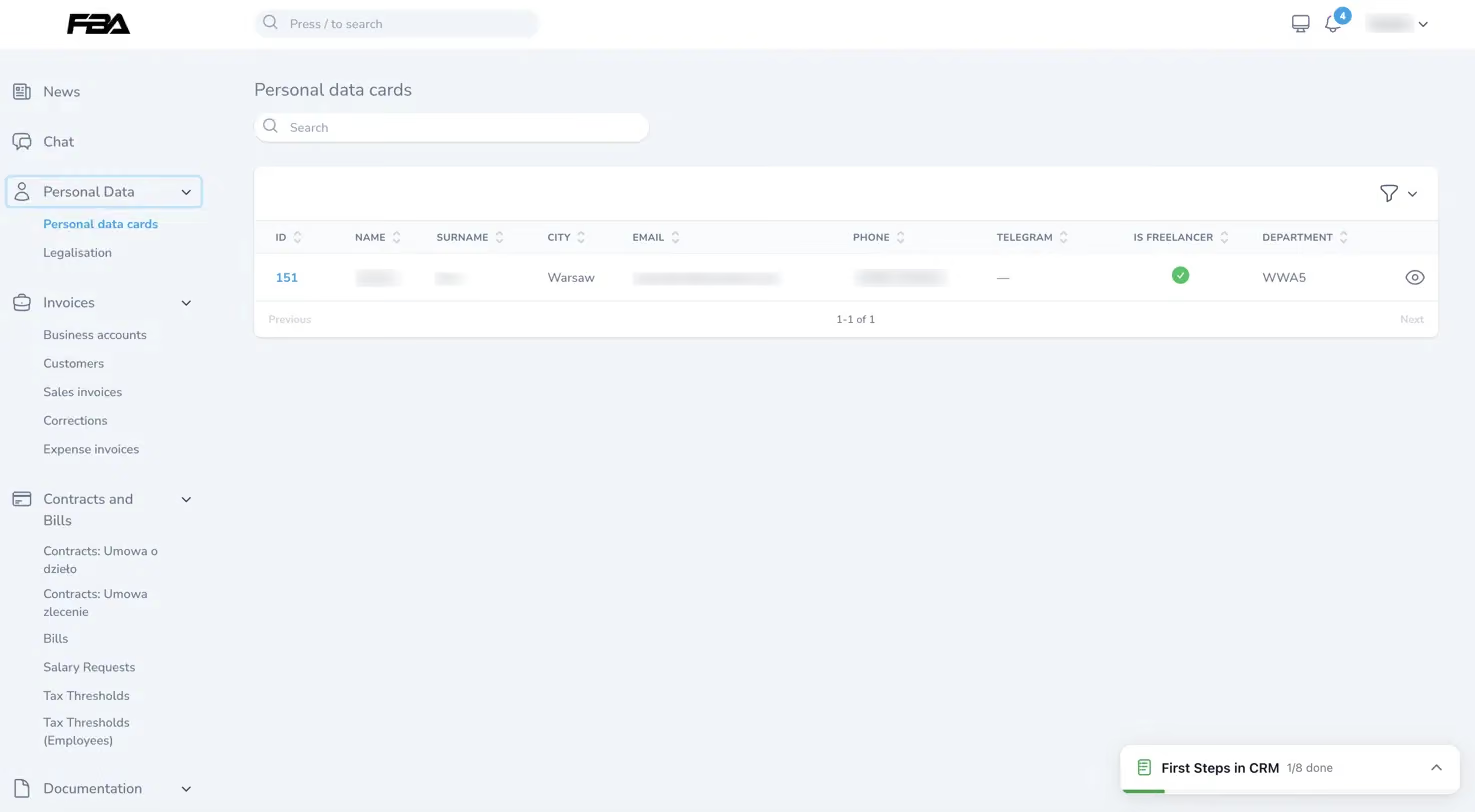
The client's own workspace with structured personal data cards, department, and freelancer status, plus the onboarding progress tracker in the corner.
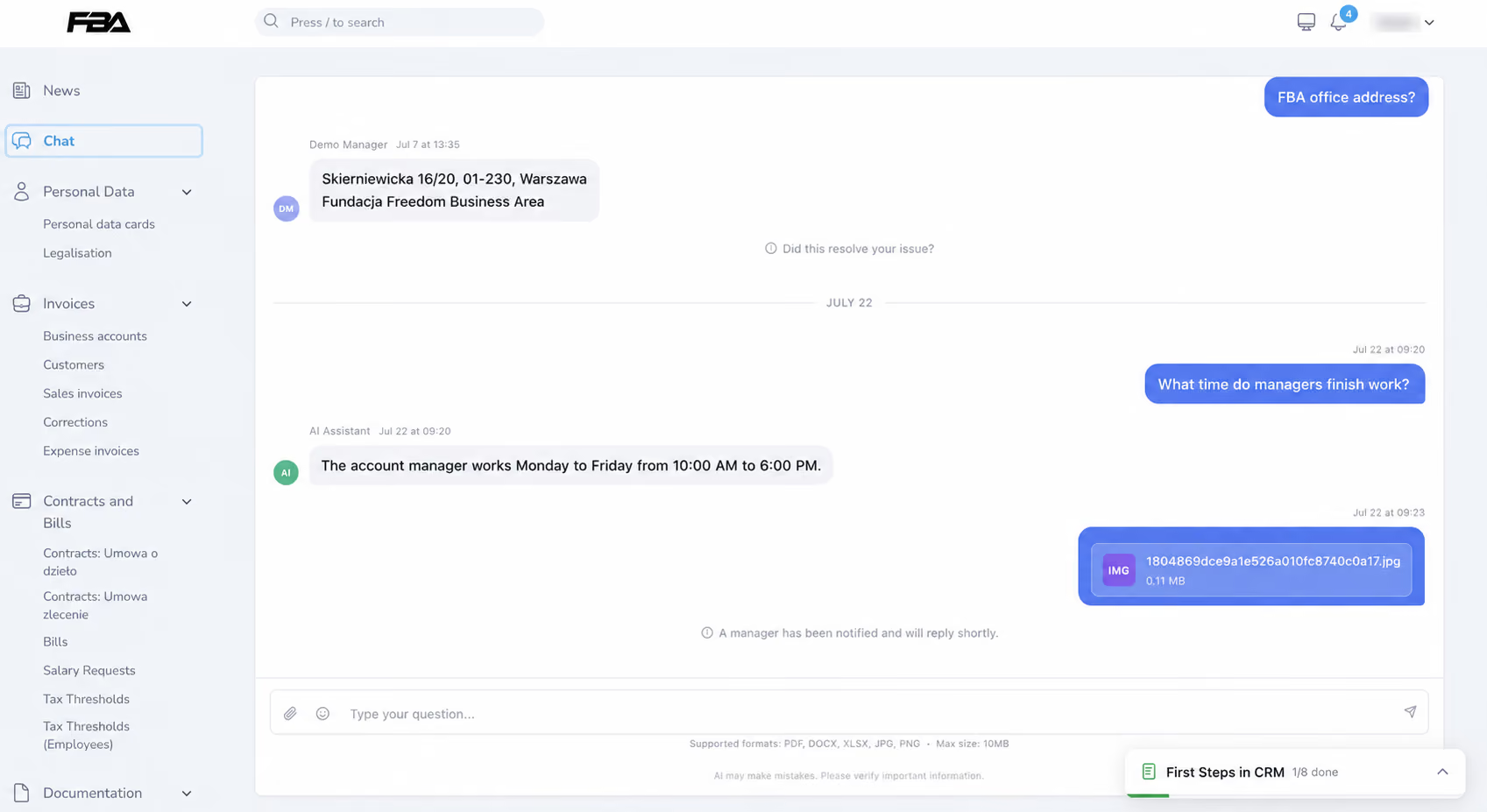
AI answers procedural questions in the client's language; attaching a file automatically routes the conversation to the responsible manager.
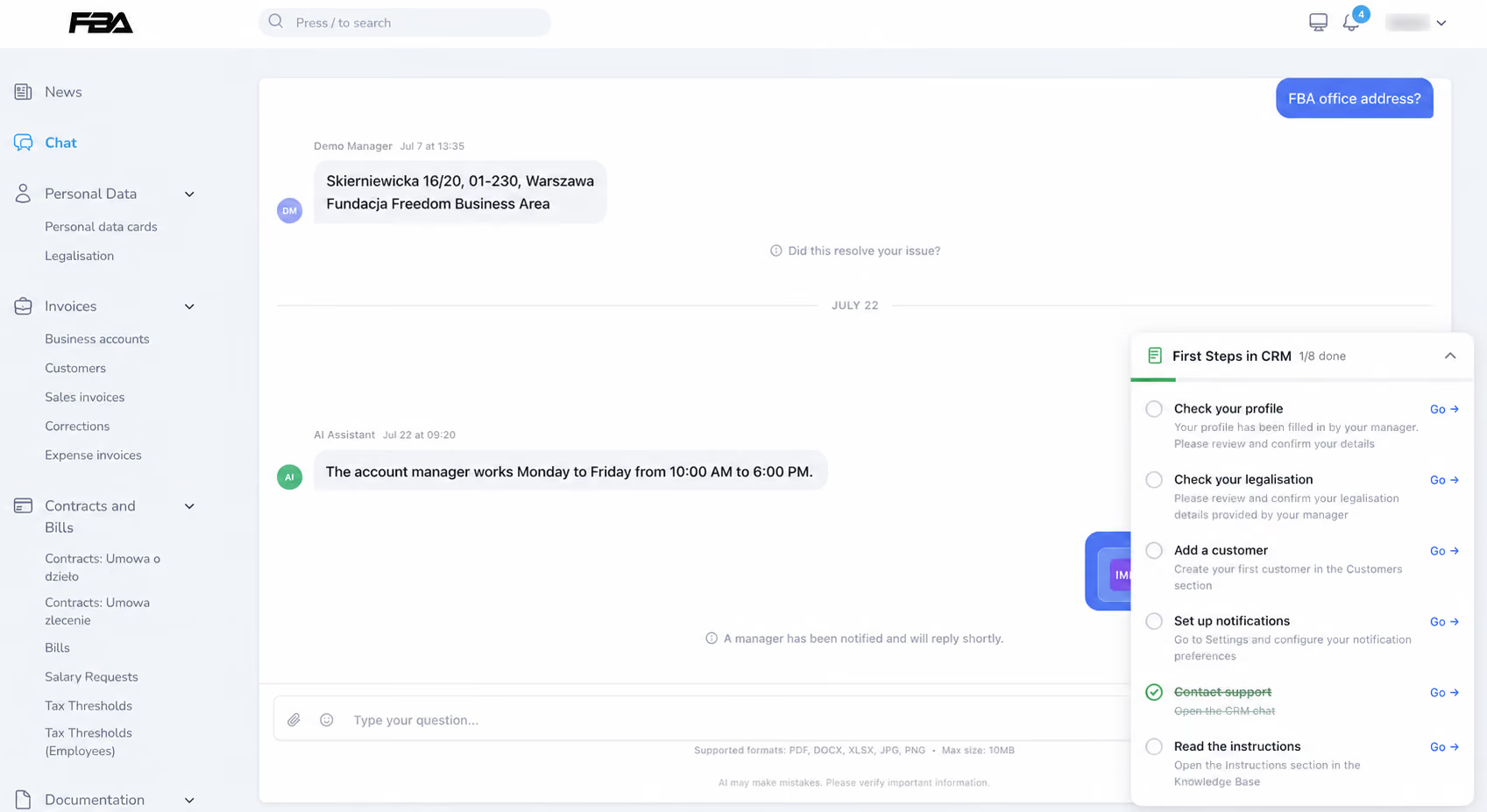
An in-Central Hub checklist that guides new clients through profile confirmation, legalisation, first customer, notifications, and support setup.
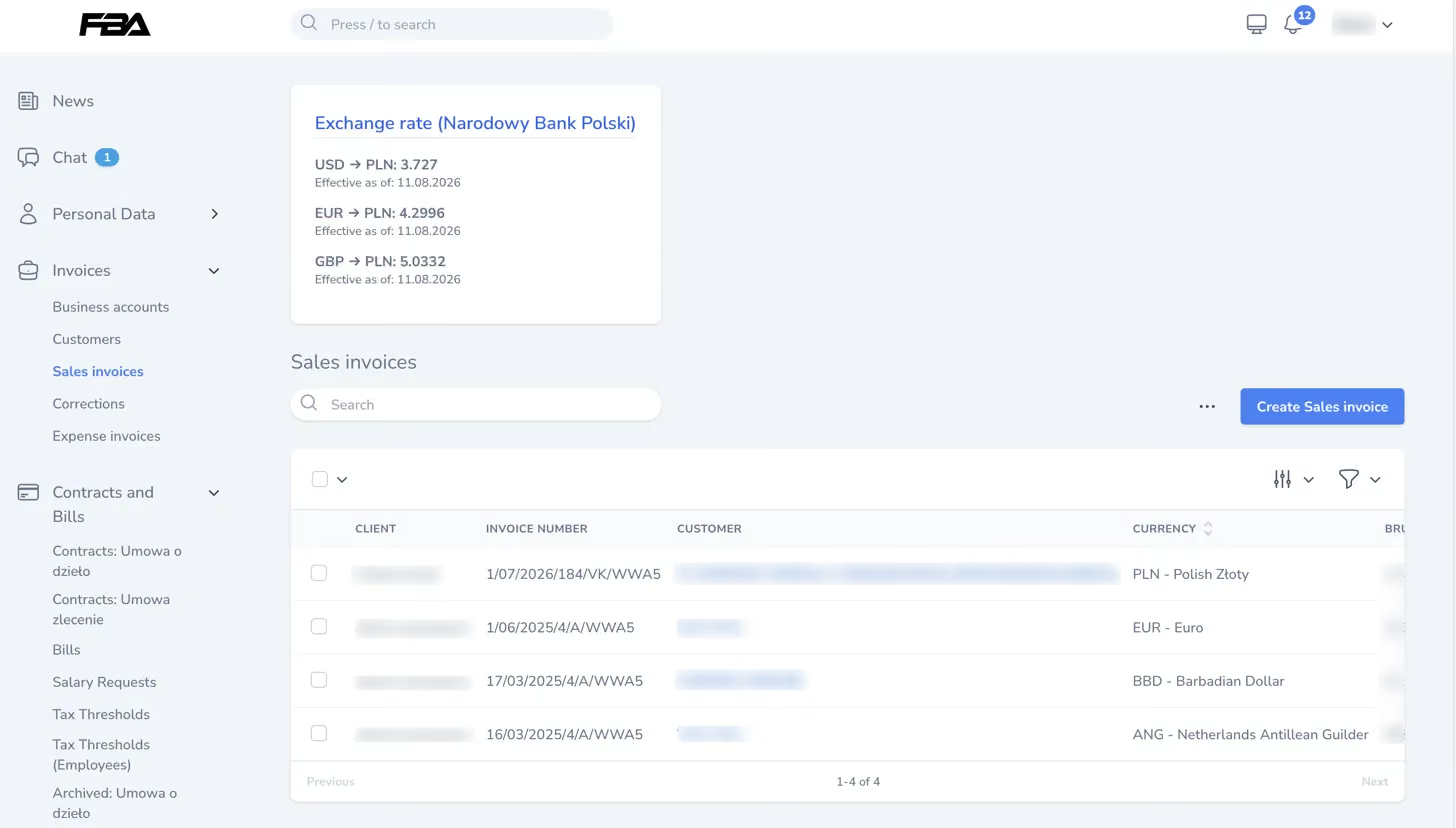
A structured invoice list with automatic exchange rates from the Narodowy Bank Polski feed, FBA-formula invoice numbers, and multi-currency support.
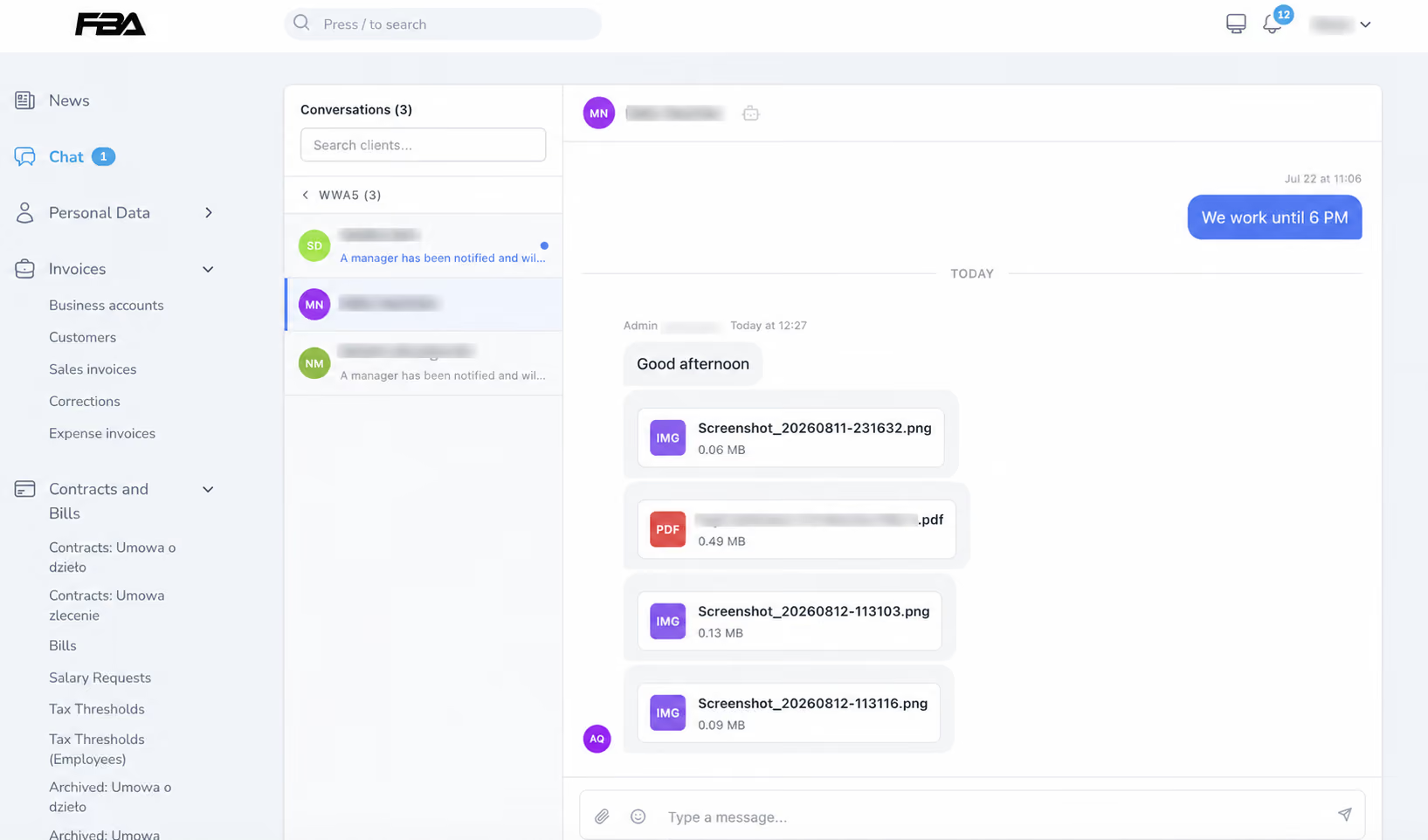
Conversations grouped by department (WWA5), with escalated chats surfaced automatically and full attachment history preserved.
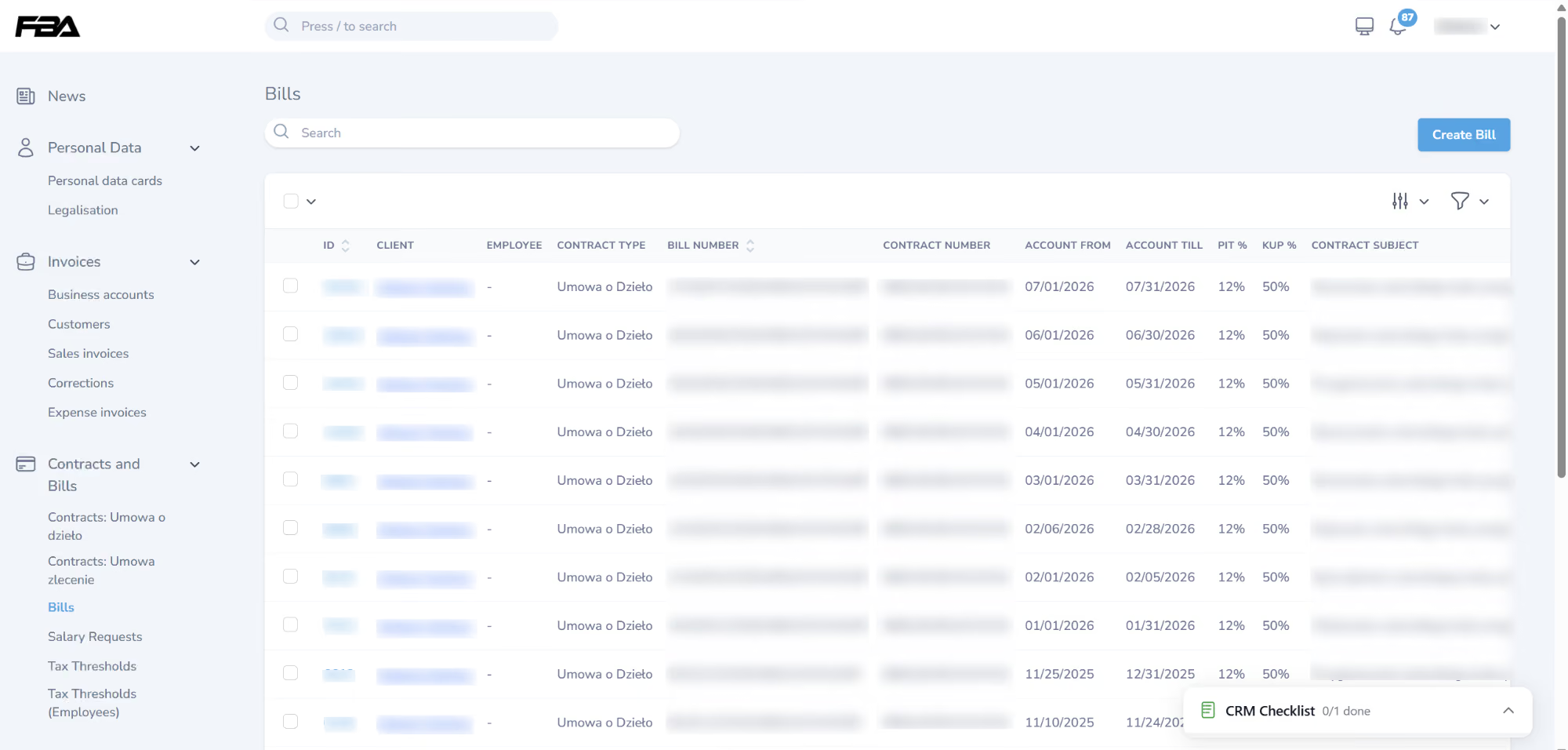
Centralized bill management with client, contract, tax, account period, and payment data in one place.


Results
- A single connected Central Hub covering personal data, financial records, legal documents, and client support — replacing spreadsheets and scattered files.
- Financial-grade reliability: automated invoice numbering, exchange-rate auto-fill, PDF generation, and Paid-status locks protect the integrity of every document.
- Legalisation compliance is now a system property, not a manual task — with proactive reminders and hard blocking rules.
- Onboarding runs on the virtual assistant, so managers only step in when a human is genuinely needed.
- The AI chat resolves the majority of recurring procedural questions across four languages, freeing managers for complex cases.
- Administrators have real visibility into support volume, escalation patterns, and per-manager load.
- The platform grows with FBA: new modules and rules plug into the same permission and notification framework, so scaling doesn't mean rebuilding.
Metrics
- +100% centralized client operations - Personal data, financial records, and legal documents live in one connected Central Hub
- −60% manager time on onboarding - New clients get guided by the virtual assistant instead of a manager
- ~70% of client questions resolved by AI - Recurring procedural questions no longer reach the manager queue
- +100% invoice automation - Numbering, exchange rates, PDF generation, and delivery run without manual work
Final Impact
For a business incubator, the Central Hub is not a back-office tool — it is the product. Every client interaction, every invoice, every legalisation document, every support conversation runs through it. FBA now has one operational layer that connects client data, financial operations, legal compliance, and AI-assisted support into a single system that scales with the business instead of against it. The manager team focuses on judgement calls; the platform handles the rest.
Client’s testimonial
Related case studies



.avif)